Showing posts with label meaning. Show all posts

Thursday, April 23, 2009

The Meaning and Symbolism of Lord Shiva


The Meaning and Symbolism of Lord Shiva - This photo beautifully depicts what Lord Shiva stands for and the meanings behind his attire

Friday, April 4, 2008

Ugadi Festival


The New year festival or Ugadi ( as it is known in Andhra Pradesh) comes along with Vasant Navratra. The name Ugadi has been derived from Yuga Aadi (Yuga + Aadi means "Beginning of New age"). The ages starting from a major reference point are Golden age, Silver age, Copper age and Iron age and also known in Hindi as Satyuga or Krutha yuga, Treta yuga, Dwapar yuga and Kaliyuga. The very end of Iron age i.e. the Kaliyuga is refer to hell or "Naraka" or the age of ignorance, which our Puranas or even in Srimath Bhagavath Gita mentioned that the Kaliyuga is "the night of the Brahma, the creator of new world and the Satyuga is the Day of Brahma".Ugadi marks the beginning of a new Hindu lunar calendar with a change in the moon's orbit. On this day, people chant mantras and the pundits make predictions for the coming year.

It is believed that the creator of the Hindu pantheon Lord Brahma started creation on this day - Chaitra suddha padhyami or the Ugadi day. Also the great Indian Mathematician Bhaskaracharya's calculations proclaimed the Ugadi day from the sunrise on as the beginning of the new year, new month and new day. The onset of spring also marks a beginning of new life with new plants, shoots and leaves.

Traditionally, on this day the panchangasravanam or listening to the yearly calendar was done at the temples but now one can get to hear the priest-scholar on television sets right in one's living room.

Like any festival it brings with it special recipes and food prepared for this day. "Ugadi pachchadi" is one such dish that has become synonymous with Ugadi. It is made of new jaggery, raw mango pieces and neem flowers and new tanarind which truly reflect life - a combination of sweet, sour and bitter tastes! See the recipe at www.desifoodtv.blogspot.com.
Jaggery represents Krutayuga and Tretayuga which is full of purity, prosperity and peace. Neem leaves represents Dwaparyuga and Kaliyuga which consists of sorrow, chaos and impurity.

The inner significance of Ugadi Pachadi is to indicate that life is a mixture of good and bad, joy and sorrow and all of them have to be treated alike. All experiences have to be treated with equanimity. Every one should make a resolve that he will face calmly whatever happens in this year, accepting it with good grace. Welcome everything. Consider everything as for one’s own good. Men should rise above sorrow and happiness, success and failure. This is the primary message of the Ugadi festival.

Also eaten on this dau id Raw Mango Rice or Mammadikaya Pulihora. In Andhra Pradesh, eatables such as "pulihora", "bobbatlu"( similar to the maharashtrian "puran poli") and other dishes with raw mango are made.

While this festival is called Ugadi in Andhra Pradesh and Karnataka, in Maharashtra it is known as "Gudipadava".

Prior to Ugadi, houses are cleaned thoroughly, new clothes and other puja and festival requirements are bought. On Ugadi day, people wake up before the break of dawn and take a head bath after which they decorate the entrance of their houses with fresh mango leaves.ugadi Pachadi is eaten. Ugadi is also the most auspicious time to start new ventures.

As per legend it is said that Kartik (or Subramanya or Kumara Swamy) and Ganesha, the two sons of Lord Siva and Parvathi were very fond of mangoes. As the legend goes Kartik exhorted people to tie green mango leaves to the doorway signifying a good crop and general well-being.

Another Ugadi tradition has become the Kavi Sammelanam or poetry recitation and is a typical Telugu Ugadi feature.Ugadi Kavi Sammelanam is also a launch pad for new and budding poets. It is generally carried live on All India Radio's Hyderabad "A" station and the Doordarshan,(TV) Hyderabad following "panchanga sravanam" (New year calendar) narrating the way the new year would shape up in the lives of people and the State in general.

Ugadi Subhakankshulu! Wishing you all a great year ahead!

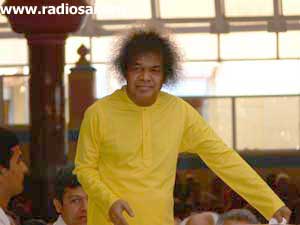
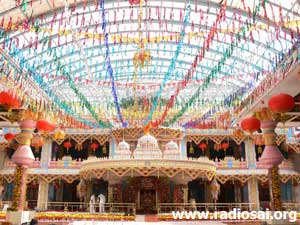
The photos are of a Sammelan, an Ugadi rangoli, Sai Ashram decorated on Ugadi and Sri Sathya Sai's Ugadi darshan.

Thursday, April 3, 2008

Gudi Padva


Gudi Padwa, also known as Ugadi, is celebrated on the first day of the Hindu month of Chaitra. This year it falls on April 6th 2008.

According to legend, this is the day on which Brahma created the world after the deluge and time began to tick from this day forth.

India is still largely an agrarian community and there is a theory that the word 'padwa' might have its roots in the Sanskrit word for crop, which is 'Pradurbhu.' The word 'padwa' as used contemporarily means 'New Year', but this day also marks the end of one harvest and the beginning of a new one, which for an agricultural community would signify the beginning of a New Year. Gudi stands for the Gudi that is hoisted outside most Maharashtrian homes. A 'gudi' is a pole on top of which an upturned brass or silver pot called a kalash is placed. A bright green or yellow cloth adorned with brocade (zari) is tied to the tip of a long bamboo over which gathi (a type of sweet), neem leaves, a twig of mango leaves and a garland of red flowers is tied. This is then hoisted by placing a silver or copper pot placed in the inverted position over it. it is also known as Brahms's flag or Brahmadwaj Some also refer to it as ‘the flag of Indra’ (Indradhvaj). On Gudi Padwa, you will find gudis hanging out of windows or otherwise prominently displayed in traditional Maharashtrian households.

Typically like most of our festivals prior to Gudi Padwa house spring cleaning is a must. On the day itself a bath early in the morning, wearing new clothes and meeting and eating meals and prasad with relatives and friends is tradition.

This festival is predominantly celebrated by Maharashtrians as "Gudi Padwa" and special festival foos like puran poli, shrikand puri and soonth phanak are eaten on this day.

Traditionally, the festival begins also by eating the bittersweet leaves of the neem tree. Sometimes, a paste of neem leaves is prepared and mixed with ajwain (carrom seeds), gram pulse, tamarind (imli) and gudh (jaggery).

Gudi Padwa also represents auspiciousness and is one of the best muhurats of the year to start anything important. The day is in particular considered auspicious for building or entering a new house, putting a child to school, or starting a business. With this day begins the new season, the spring.

It is believed as per legend that on 'Gudi Padva' :

* The Universe was created by Brahma.
* Satyuga (The Age of Truth and Justice) began.
* King Vali was killed by Rama.Shri Rama returned to Ayodhya victorious.

This festival is known as Gudi Padwa in Maharashtra and Ugadi in Karnataka and Andhra Pradesh. It has become a custom to hold Kavi Sammelans (Poetry recitals) this day.